

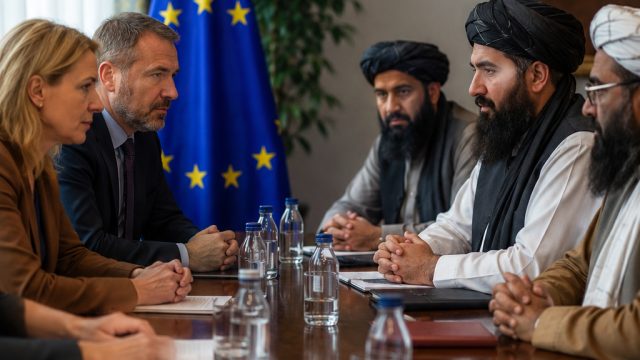
In a significant shift in diplomatic relations, the European Union has hosted representatives from the Taliban for talks centered around the issue of Afghan deportations. This unprecedented meeting, held in Brussels, marks the first time EU officials have formally engaged with the Taliban since the group regained power in Afghanistan. The discussions have sparked a range of opinions and reactions within the international community, raising critical questions about the future of human rights and humanitarian assistance in the region.
The Context of the Meeting
In light of ongoing challenges surrounding Afghan refugees and the Taliban's governance, the EU aims to address the pressing issue of deportations. With thousands of Afghans seeking asylum in European countries, the bloc faces increasing pressure to develop a coherent policy regarding those who do not qualify for international protection. The Taliban's recent visit is seen as both an opportunity to facilitate deportation processes and to negotiate for greater consular access for Afghan nationals within Europe.
Background on the Taliban's Rule
Since taking control of Afghanistan in 2021, the Taliban's governance has raised considerable concern regarding human rights practices, especially concerning women and minorities. International organizations have highlighted the significant challenges faced by Afghan citizens, prompting the EU to reconsider its engagement strategy with the Taliban. The meeting in Brussels reflects an attempt to balance humanitarian needs with political realities.
Implications of the Talks
The implications of this meeting could be far-reaching. By engaging with the Taliban, the EU is potentially setting a precedent for future diplomatic relations. This dialogue may lead to an understanding that could shape the treatment of Afghan deportees and pave the way for better access to essential services for Afghans residing in Europe.
Potential Benefits for Afghan Citizens
- Improved Consular Services: The Taliban's push for enhanced consular access could lead to better support for Afghans in distress.
- Deportation Policies: Clearer guidelines on deportations may ensure that vulnerable individuals are not sent back to unsafe conditions.
- Humanitarian Aid Access: Increased diplomatic engagement could facilitate the flow of humanitarian assistance to those in need.
Challenges Ahead
Despite the potential benefits, numerous challenges remain. Many human rights advocates express skepticism regarding the Taliban's commitment to improving conditions for Afghan citizens. The meeting may have opened a dialogue, but the reality on the ground continues to be alarming. Concerns persist about the Taliban's treatment of individuals who oppose their regime and the overall humanitarian crisis in Afghanistan.
International Reactions
The international community has responded with a mix of caution and hope. While some view the EU's engagement as a pragmatic approach, others argue that legitimizing the Taliban's rule could undermine efforts to promote human rights. The balance between addressing immediate humanitarian needs and holding the Taliban accountable for their actions is a contentious issue that will likely dominate discussions in the coming months.
Conclusion: A Fork in the Road
The EU's decision to engage in dialogue with the Taliban represents a crucial turning point in international relations regarding Afghanistan. As the situation unfolds, it is essential for the EU and the global community to monitor the developments closely. The stakes are high, as the decisions made during this pivotal moment could either contribute to a more stable and humane response to the Afghan crisis or further entrench the challenges faced by millions of Afghan citizens.