

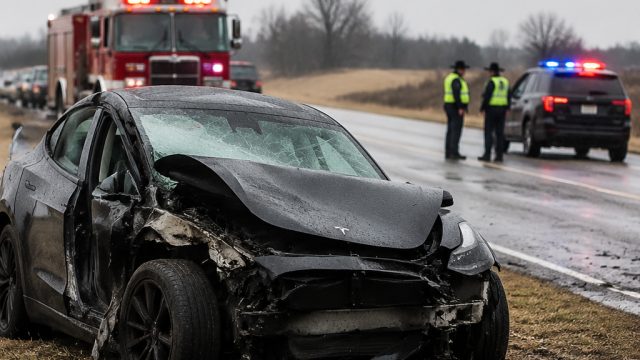
In a significant development for the automotive industry, the National Highway Traffic Safety Administration (NHTSA) has initiated an investigation following a tragic incident involving a Tesla vehicle. This probe arises from a crash that occurred on Friday in a Texas neighborhood, where a Tesla Model 3, utilizing an automated driving feature, collided with a home at high speed, resulting in the death of a 76-year-old woman inside.
The Incident: What Happened?
The unfortunate event took place in the vicinity of Houston, Texas. Reports indicate that the Tesla was operating in a mode recognized for its advanced driving capabilities—part of the suite of technologies promoted by Elon Musk as pivotal to the future of the brand. The NHTSA's investigation marks a critical moment in the discourse surrounding automated driving systems, particularly as safety remains a paramount concern.
Details of the Crash
- Location: Houston, Texas
- Vehicle: Tesla Model 3
- Feature in use: Automated driving technology
- Victim: 76-year-old woman
The Implications of the Investigation
The opening of this special investigation by the NHTSA is noteworthy not only due to the loss of life but also because it raises questions about the safety protocols surrounding autonomous vehicle technology. This scrutiny comes at a time when the demand for advanced driver-assistance systems is at an all-time high, and consumer trust hangs in the balance.
Regulatory Oversight in Autonomous Driving
The NHTSA's role is essential in ensuring that safety standards are upheld in all vehicles, especially those equipped with cutting-edge technology. Investigations like this can lead to:
- Increased regulatory requirements for automated vehicles
- Revisions to existing safety protocols
- Greater accountability for manufacturers
As the NHTSA delves into the specifics of this incident, the outcomes may have lasting effects on how autonomous vehicles are developed, tested, and deployed in the future.
Public Reaction and Industry Response
The immediate aftermath of the crash has evoked a range of reactions from the public and stakeholders in the automotive sector. Many express concern over the reliability of automated driving features, questioning whether such systems can be trusted in everyday scenarios.
Consumer Sentiment
Public opinion can greatly influence the future of automotive technology. Various surveys indicate that:
- Consumers are increasingly wary of fully autonomous vehicles.
- Demands for transparency in safety testing are growing.
- There is a call for stricter regulation and oversight from manufacturers.
Conclusion: A Crossroads for Tesla and Autonomous Technology
This tragic incident presents a crossroads for Tesla and, by extension, the entire autonomous vehicle industry. As the NHTSA investigates, the outcomes could redefine safety standards and consumer trust in automated driving technology. Understanding and addressing the concerns raised by this incident will be vital for Tesla to maintain its leadership in the evolving landscape of vehicular automation.
Moving forward, it is crucial for both manufacturers and regulators to collaborate closely to ensure that safety is prioritized as innovations continue to reshape the automotive world. This investigation will serve as a key indicator of how the industry responds to such challenges and ensures the safety of all road users.