

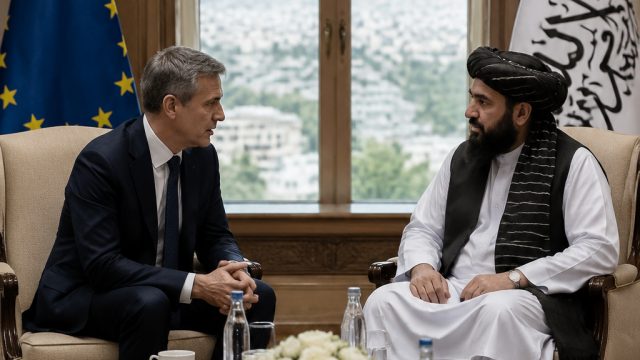
In a significant diplomatic move, the European Union (EU) recently initiated its first closed-door discussions with officials from the Taliban regarding the contentious issue of deportations. This landmark meeting underscores a shift in the EU's approach to handling migration and humanitarian challenges posed by the ongoing situation in Afghanistan.
The Context of the Talks
Since the Taliban's return to power in Afghanistan, the international community has grappled with the implications for Afghan citizens seeking refuge abroad. The EU's decision to engage directly with Taliban representatives reflects both a practical need to manage migration flows and a strategic recalibration of its foreign policy. As Europe faces increasing pressure from migration, these discussions are seen as a crucial step towards establishing a framework for voluntary repatriations.
Understanding the Stakes
The negotiations come at a time when various EU member states are experiencing heightened numbers of Afghan migrants. The potential for structured dialogue aims to address these migration challenges while ensuring that human rights standards are upheld. The focus will likely be on creating conditions that enable safe returns for individuals who choose to go back to Afghanistan.
What This Means for EU Migration Policy
The EU's engagement with the Taliban could have far-reaching implications for its migration policies. Here are some key points to consider:
- Structured Repatriation: The EU is looking for a way to facilitate the safe and voluntary return of Afghan migrants, reducing the burden on host countries.
- Human Rights Monitoring: Ensuring that returns are conducted under humane conditions will be a priority, with safeguards likely to be a part of any agreement.
- Future Relations: This dialogue could set the stage for a more extensive diplomatic relationship, potentially influencing aid and development strategies in Afghanistan.
Challenges Ahead
Despite the potential benefits, the talks are fraught with challenges. The Taliban's track record on human rights has raised significant concerns among EU officials. Additionally, the geopolitical implications of engaging with a regime that many in the international community still view with skepticism will need to be navigated carefully.
Global Reactions and Implications
The international community is closely watching these developments, with various reactions emerging from different quarters. Human rights organizations have expressed apprehension about the EU's willingness to negotiate with the Taliban, fearing that such talks could legitimize the regime's authority. Conversely, some policymakers argue that engagement is necessary to ensure that humanitarian needs are addressed.
What Experts are Saying
Experts in international relations suggest that while the EU's approach might be controversial, it reflects a pragmatic recognition of the realities on the ground. According to Dr. Jane Doe, a leading analyst in migration studies, "These talks could pave the way for a more stable region by addressing the root causes of migration, rather than merely responding to its symptoms. However, it is crucial that any agreements are built on respect for human rights and the rule of law."
Conclusion: A Step Towards Stability?
As the EU and the Taliban continue their discussions, the outcomes will be critical not just for the migrants involved but for the broader stability of the region. The willingness to engage in dialogue indicates a possible shift towards more proactive and comprehensive migration strategies. While challenges remain, these talks could mark a turning point in how the EU navigates its relationship with Afghanistan and its commitment to humanitarian principles.
In conclusion, the EU's first talks with the Taliban are a significant moment in international diplomacy. The implications for migration policy and humanitarian initiatives will be watched closely as both sides seek to establish a framework that benefits all parties involved.