

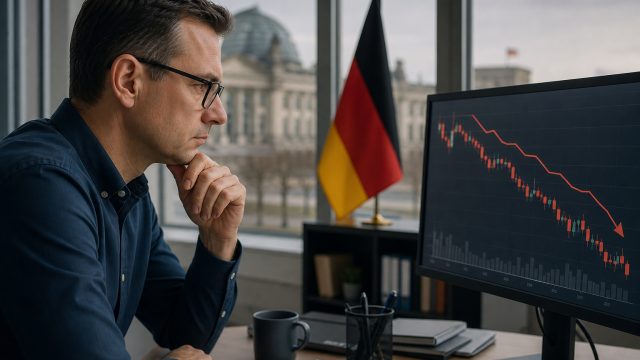
As the global economy continues to navigate through unpredictable challenges, Germany finds itself at a crucial crossroad. Economic indicators suggest a significant slowdown, prompting analysts to delve deeper into the underlying factors and their implications for both the nation and the broader European market.
The Drivers Behind Germany's Economic Deceleration
Germany, often viewed as the economic powerhouse of Europe, is experiencing a period of unexpected stagnation. Several elements are contributing to this downturn:
- Supply Chain Disruptions: The ongoing effects of the pandemic have revealed vulnerabilities in global supply chains, leading to increased costs and delays, particularly in manufacturing.
- Energy Crisis: Rising energy prices, exacerbated by geopolitical tensions, are significantly impacting production costs and consumer spending.
- Labor Market Challenges: A shortage of skilled workers has left many businesses struggling to meet demand, further hindering growth.
Impact of Supply Chain Issues
The pandemic has highlighted the fragility of international supply networks. Germany's reliance on imports for critical components has made its economy particularly susceptible to disruptions. Many companies are now reassessing their supply chain strategies, looking to diversify and localize production to mitigate future risks.
Energy Prices and Economic Growth
Energy costs in Europe have surged, creating a ripple effect across all sectors. For industries like automotive manufacturing, which are pivotal to Germany's economy, these costs directly impact production rates and profit margins. Consumers are also feeling the pinch, leading to a decline in discretionary spending that could further stifle economic growth.
Analyzing the Labor Market Landscape
Germany's labor market is currently facing challenges that threaten to exacerbate the economic slowdown. The shortage of skilled labor has become a pressing issue for many sectors:
- Healthcare: The healthcare sector is particularly hard-hit, with a lack of professionals to manage the increasing demand for health services.
- Technology: The tech industry, which relies on skilled labor for innovation, is struggling to fill essential roles, hindering technological advancements.
- Manufacturing: A significant portion of the workforce in manufacturing is nearing retirement, leading to a gap in expertise that is difficult to fill.
Strategies for Attracting Talent
To combat these labor shortages, companies are implementing various strategies:
- Enhancing training and apprenticeship programs to equip a new generation with the necessary skills.
- Offering more competitive salaries and benefits to attract talent from other countries.
- Investing in automation and technology to reduce dependence on human labor.
Implications for the European Economy
The effects of Germany's economic slowdown extend beyond its borders, impacting the overall stability of the European economy. As the largest economy in the EU, Germany's performance is closely tied to that of its neighbors:
- Trade Relationships: A weakened German economy could lead to reduced demand for exports from other European nations, creating a domino effect.
- Monetary Policy Adjustments: The European Central Bank may need to consider adjusting interest rates or implementing stimulus measures to support the region.
- Social Stability: Economic hardships can lead to increased social tensions, potentially affecting political stability.
Preparing for Future Challenges
To navigate these turbulent times, Germany and its European partners must engage in proactive measures. Diversifying energy sources, investing in sustainable technologies, and enhancing workforce development programs are essential steps toward building a more resilient economy.
Conclusion: A Call for Adaptation and Resilience
As we observe the unfolding economic landscape, it is crucial for stakeholders, including businesses and policymakers, to adapt swiftly to the changing dynamics. The slowdown presents both challenges and opportunities for innovation and growth. By addressing the underlying issues head-on, Germany can reclaim its position as a leader within the global economy, fostering stability not just for itself but for Europe as a whole.